Transforming One-Time Interactions into Long-Term Relationships: The Power of Email Automation
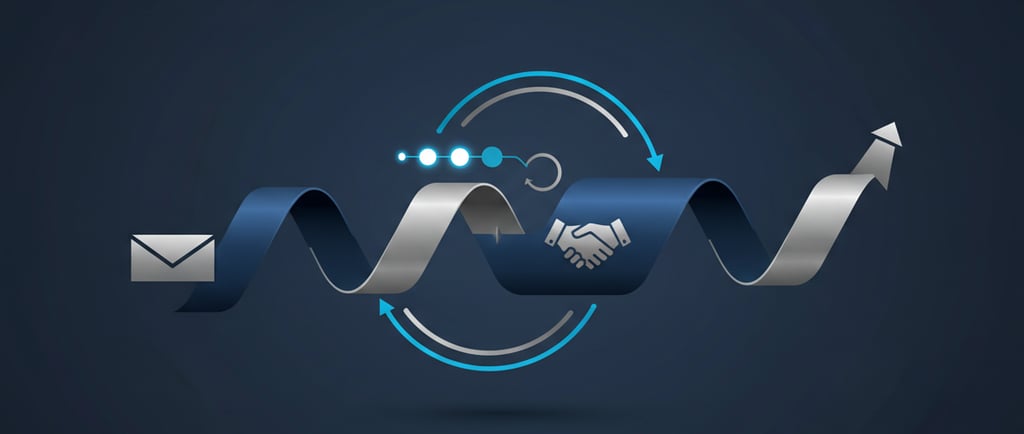
Email and automation turn one-time interactions into long-term relationships. This post explores how automated email sequences support customer journeys, improve engagement, and ensure no opportunity is missed, even as your business grows and lead volume increases.
EMAIL AND AUTOMATION
12/12/20258 min read
Introduction to Email Automation
Email automation refers to the technology that allows businesses to send emails to customers or prospects automatically based on predefined triggers or schedules. This powerful tool is integral to modern marketing strategies, enabling companies to connect with their audience in a timely and personalized manner without continuous manual intervention. The integration of email automation into marketing efforts not only streamlines communication but also enhances the ability to nurture leads and manage relationships with customers effectively.
By leveraging email automation systems, organizations can create personalized email sequences that guide customers through their journey, transforming one-time interactions into meaningful, long-term relationships. These automated sequences can be tailored based on user behavior, preferences, and engagement levels, ensuring that each recipient receives relevant content at the right time. For example, automated emails can welcome new subscribers, follow up after a purchase, or re-engage lapsed customers. Such strategic messaging fosters a sense of connectivity and loyalty that is crucial for business growth.
The importance of email automation in contemporary marketing cannot be overstated. With increasing competition and a bombardment of messages vying for consumer attention, it becomes vital for brands to stand out while maintaining a personal touch. Email automation allows businesses to scale their outreach efficiently while still conveying individualized messages. Moreover, it offers valuable insights into customer behavior through analytics, enabling brands to continuously refine their strategies for greater impact.
As we delve deeper into the various aspects of email automation, we will explore how businesses can implement these tools effectively and the resulting benefits. The ability to maintain long-term relationships with customers can significantly influence retention rates and brand loyalty, making email automation a cornerstone of successful marketing endeavors.
Understanding Customer Journeys
The concept of customer journeys encompasses the various stages that individuals experience from their first interaction with a brand to their eventual conversion and beyond. Understanding these stages is critical for businesses seeking to create personalized and meaningful engagements through email automation. The journey typically begins with awareness, where potential customers encounter a brand for the first time. This can occur through various channels such as social media, advertisements, or word-of-mouth referrals.
Following the awareness stage, customers enter the consideration phase. At this juncture, they begin to evaluate the brand's offerings, often comparing them with competitors. Organizations can leverage email automation to nurture leads by providing tailored content that addresses specific needs and pain points. Automated emails can deliver informative resources, product comparisons, and testimonials designed to aid customers in their decision-making process.
Once the customer feels confident in their choice, they move into the conversion stage. Here, automation can play a vital role in enhancing the purchasing experience, sending reminders or exclusive offers that encourage customers to finalize their decision. Post-purchase, the journey continues as customers become part of the retention stage. Strategically timed emails can express gratitude, solicit feedback, or offer tips on maximizing the product’s benefits, thereby reinforcing the relationship.
Mapping out these customer journeys is essential for effectively utilizing email automation. By understanding customer behaviors at each stage, businesses can create targeted and relevant campaigns that resonate with their audience. Adopting a customer-centric approach not only enhances the likelihood of conversion but also fosters long-term relationships, paving the way for loyalty and advocacy in the future. In this context, email automation serves as a powerful tool that can enhance customer journeys, from initial contact to ongoing engagement.
Benefits of Automated Email Sequences
Automated email sequences offer a myriad of advantages that enhance communication and foster long-term relationships between businesses and their clients. One of the primary benefits is personalized communication. By leveraging data such as user behavior and preferences, businesses can create tailored messages that resonate with the recipient. This personalization makes clients feel valued and understood, which can significantly increase engagement rates. When customers feel a connection to the message, they are more likely to respond positively, fostering loyalty and enhancing long-term relationships.
Consistency in messaging is another critical advantage of automated email sequences. Maintaining a cohesive brand voice and message is essential for building trust. Automated emails ensure that businesses can communicate consistently, delivering the same information to all recipients, regardless of the time or circumstance. This consistency can reduce misunderstandings and reassure customers that they are receiving reliable information. Regularly scheduled emails, whether for updates, promotions, or newsletters, create a rhythm that helps clients know what to expect, thus enhancing their overall experience.
Furthermore, automated email sequences play a significant role in nurturing leads over time. Unlike one-off communications, these sequences allow businesses to engage with potential clients repeatedly without overwhelming them. By providing valuable content gradually, businesses can educate their audience and help them through their decision-making process. This gradual nurturing can lead to increased conversions as clients gain trust and familiarity through a series of helpful interactions.
Incorporating automated email sequences into marketing strategies is increasingly essential in today's fast-paced environment. The combination of personalized engagement, consistent messaging, and effective lead nurturing creates a foundation for lasting customer relationships. Businesses that harness these benefits are better positioned to thrive in competitive landscapes.
Improving Engagement Through Targeted Outreach
In the dynamic landscape of digital marketing, enhancing customer engagement has become paramount for businesses seeking to cultivate long-lasting relationships with their audience. One of the most effective strategies to achieve this is through targeted email outreach facilitated by automation. By employing automation tools, brands can segment their audiences based on various criteria, such as demographics, purchasing behavior, and interests. This segmentation allows companies to tailor their messaging more effectively, ensuring that each communication resonates with distinct groups within their target market.
When crafting messages for specific segments, it is essential to consider the unique preferences and needs of those groups. Automated email campaigns can be designed to deliver personalized content that speaks directly to the interests of recipients, whether through product recommendations, curated content, or exclusive offers. Such targeted communication not only captures the attention of the audience but also encourages them to engage more with the brand. Research indicates that personalized emails have higher open and click-through rates compared to generic messages, underscoring the effectiveness of this approach.
Furthermore, leveraging data analytics can significantly enhance the outreach efforts. By analyzing customer interactions and feedback, businesses can refine their targeting strategies, ensuring continuous improvement in engagement levels. This analysis allows brands to understand which messages and offers are most effective, enabling them to further tailor their communications. By utilizing automation in this manner, companies can maintain the relevance of their outreach without sacrificing efficiency.
Ultimately, the goal of targeted email outreach is to keep customers engaged and invested in the brand over time. By understanding their audience and delivering customized content that aligns with their preferences, businesses can foster a sense of loyalty and trust, which are vital components of a successful long-term relationship.
Ensuring No Opportunity Is Missed
In the digital age, where communication spans numerous platforms and timelines, the importance of automation in capturing every potential opportunity throughout the customer lifecycle cannot be overstated. Email automation serves as a crucial tool for businesses looking to streamline their outreach efforts and maintain meaningful connections with both leads and existing customers. By implementing automated email reminders and follow-up sequences, organizations can ensure that no critical interactions are overlooked.
Automated email reminders play a significant role in re-engaging customers who may have shown interest but did not complete their purchasing journey. These timely nudges can be designed to reach individuals shortly after they abandon shopping carts or show interest in specific products. This strategy not only serves to remind customers of their initial interest but also keeps the brand at the forefront of their minds, effectively increasing the chances of conversion.
In addition to reminders, automated follow-up emails can be customized to nurture leads throughout various stages of the buyer’s journey. These emails provide valuable information, such as product tutorials or customer testimonials, reassuring potential customers about their decision-making process. Furthermore, a strategic and personalized follow-up schedule can address the unique concerns of each lead, fostering an environment where inquiries are welcomed and promptly attended to.
Re-engagement campaigns also play a pivotal role in maintaining contact with dormant leads or customers who have not interacted with the brand for a while. By leveraging automation, businesses can craft targeted emails designed to rekindle interest. These messages can include personalized incentives, exclusive offers, or updates about new products, thereby potentially reigniting a dormant relationship.
Ultimately, employing automation in email marketing serves as an effective strategy for ensuring that no relationship is left untapped, allowing businesses to capture every potential opportunity across the customer lifecycle.
Scaling Your Business with Email Automation
Email automation plays a pivotal role in enabling businesses to grow while maintaining meaningful interactions with their customers. As organizations expand, the volume of leads and customer touchpoints frequently increases, necessitating a strategic approach to communication. This is where effective email automation systems come into play, allowing businesses to craft personalized messages tailored to individual needs without sacrificing efficiency.
One of the key advantages of employing email automation is the ability to segment audiences intelligently. By categorizing customer data based on demographics, purchasing behavior, or engagement levels, businesses can design targeted campaigns that speak directly to the recipient's interests. This targeted approach cultivates a personal touch that helps build lasting relationships. For example, a customer who has recently made a purchase may appreciate a follow-up email recommending related products, fostering a sense of care and attention from the brand.
Moreover, as businesses scale, maintaining consistency in communication becomes challenging. Email automation offers solutions for maintaining a cohesive brand voice across various channels. By scheduling regular newsletters, promotional offers, and personalized messages, companies can engage with their audience more effectively. Automated workflows can nurture leads from initial interest to final purchase, ensuring that each touchpoint is thoughtfully executed.
To scale successfully with email automation, it is crucial to measure performance metrics routinely. Businesses should analyze open rates, click-through rates, and conversion metrics to discern which strategies resonate with their audience. This data-driven approach enables ongoing optimization, ensuring that email marketing remains effective as business operations expand.
In conclusion, email automation is an essential tool for businesses aiming to grow sustainably and efficiently. By integrating personalized communication strategies and leveraging data analytics, organizations can develop long-term customer relationships while managing increased lead volumes seamlessly.
Conclusion and Future Trends
In recent years, email automation has emerged as a pivotal tool for businesses aiming to establish lasting connections with their clients. The ability to automate personalized communication allows organizations to nurture leads effectively and keep existing customers engaged. By leveraging email automation, companies can turn one-time interactions into meaningful relationships that foster brand loyalty and customer satisfaction. As customers increasingly expect personalized experiences, the role of email automation in meeting these demands cannot be overstated.
Looking ahead, we can anticipate several key trends in email marketing and automation that are likely to shape the future of relationship building. One major trend is the growing integration of artificial intelligence (AI) and machine learning. These technologies enable businesses to analyze customer behavior and preferences effectively, allowing for even more tailored email content. With advanced algorithms, companies can predict customer needs and deliver timely, relevant messages that resonate with the recipient's interests.
Another significant trend is an increased focus on data privacy and security. With consumers becoming more cautious about their personal information, businesses will need to prioritize transparent communication regarding data usage. Ensuring compliance with regulations such as GDPR and CCPA will be essential in maintaining trust in email relationships. Organizations that transparently communicate their practices and prioritize customer privacy will likely strengthen their relationships over time.
Additionally, interactive elements in emails are expected to gain traction. Incorporating features such as polls, surveys, or dynamic content can enhance engagement and provide valuable insights into customer preferences. Adapting to these evolving trends will enable companies to continuously optimize their email automation strategies, ultimately forging deeper connections with their customers.
In conclusion, the future of email automation in relationship building appears bright, with numerous opportunities for businesses willing to adapt and innovate in response to changing consumer expectations.
Contact
Reach out to start growing your business
Phone
Info@knightmarketingfirm.com
239-989-2981
© 2025 Knight Marketing Firm. All rights reserved.