10 Marketing Reasons Why Reputation Management Services Are Important
Discover why reputation management is crucial for building trust, credibility, and visibility in today’s digital landscape. Learn how managing online reviews, responding to feedback, and maintaining a positive brand image can help law firms attract new clients, enhance search rankings, and drive long-term growth. Explore proven strategies for handling negative reviews and supporting higher conversion rates through effective reputation management.
REPUTATION MANAGEMENT
Knight Marketing
2/7/20264 min read
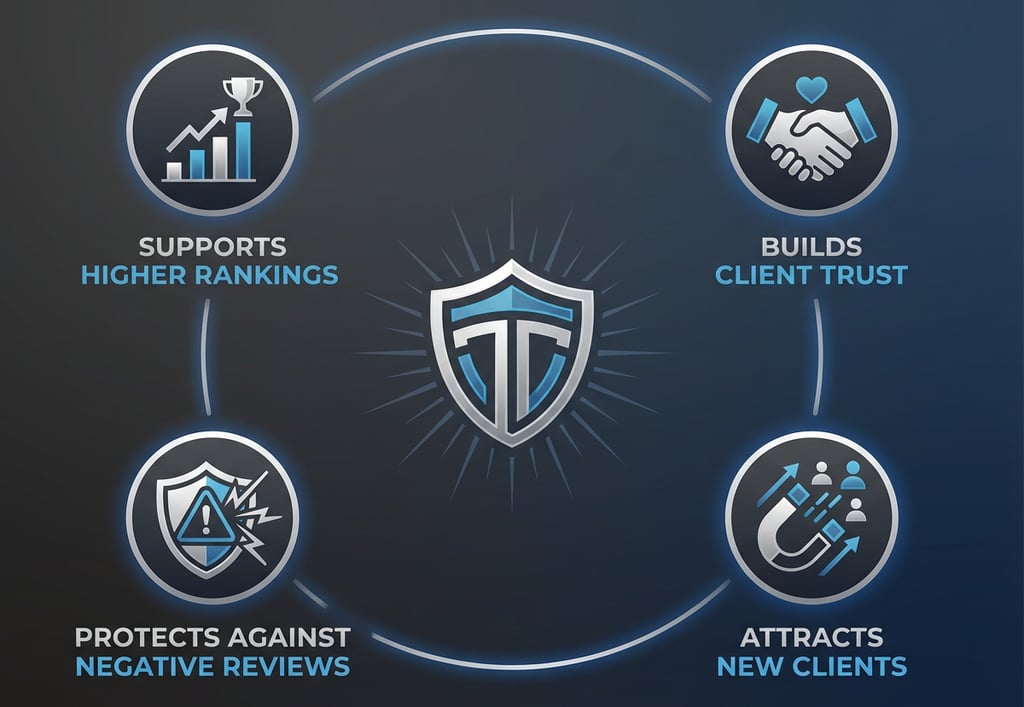

Building Trust and Credibility
In today's digital landscape, businesses must recognize the significance of managing their online reputation. Reputation management services play a pivotal role in establishing trust and credibility with potential customers. As consumers increasingly rely on online information, a positive online presence becomes essential for attracting and retaining clients.
Trust is a fundamental aspect of consumer behavior, and it often hinges on perceptions shaped by online reviews and testimonials. Reputation management enables businesses to monitor and respond to customer feedback, thereby fostering a transparent relationship with their audience. By addressing concerns and highlighting positive interactions, companies can demonstrate their commitment to customer satisfaction, which enhances their credibility.
Moreover, the proliferation of social media platforms means that customer opinions can rapidly influence public perception. A single negative review can deter potential customers, while positive testimonials can significantly enhance a brand's reputation. Reputation management services assist businesses in curating their online image by promoting favorable reviews and addressing false or misleading information. This proactive approach not only mitigates potential damage but also showcases the company's dedication to quality and service.
The overall impact of a well-managed online reputation extends beyond customer attraction; it builds long-term loyalty and encourages repeat business. When consumers feel confident in the credibility of a brand, they are more likely to choose its products or services over competitors. In an era where choices are abundant, establishing a strong foundation of trust can provide a significant competitive advantage.
Ultimately, reputation management services are integral to developing a trustworthy image that resonates with audiences. Companies that prioritize their online reputation not only enhance their consumer's trust but also position themselves for sustained success in the market.
Managing Negative Reviews Effectively
In the realm of reputation management, handling negative reviews is a critical component that can significantly influence a company's public image and ultimately its sales. Negative feedback can be detrimental; it not only tarnishes a brand's reputation but also deters potential customers from engaging with the business. Therefore, having an effective strategy for managing these unfavorable reviews is essential.
One effective method for addressing negative reviews involves a prompt and professional response. Companies should acknowledge the customer's concerns and express genuine empathy for their experience. This demonstrates to other customers that the business values feedback and is committed to improving its services. A timely response can mitigate the immediate damage caused by negative reviews and may even dissuade potential buyers from being influenced by a single adverse opinion.
Another strategy is to take the conversation offline where appropriate. If a conversation begins to escalate on a public platform, inviting the dissatisfied customer to discuss their issues privately can often lead to a more favorable outcome. This prevents further public exposure of the issue and allows the company the opportunity to resolve any problems directly, restoring the customer's faith in the brand.
Additionally, fostering a culture of transparency and accountability encourages customers to leave honest reviews, both positive and negative. By actively encouraging constructive criticism, companies can collect valuable insights that inform improvements while showcasing their commitment to customer satisfaction. In this way, effective management of negative reviews not only helps in damage control but can also serve as a tool for growth.
In conclusion, negative reviews, while potentially harmful, can be transformed into an opportunity for engagement and improvement when managed effectively. By implementing well-defined strategies, businesses can navigate the challenges posed by negative feedback and ultimately enhance their reputation.
Enhancing Brand Visibility
Effective reputation management services play a crucial role in enhancing a brand's visibility in search results. In today's digital landscape, consumers increasingly rely on online information when making purchasing decisions. By actively managing a brand's online reputation, organizations can ensure that positive content is prominently featured, overshadowing any negative perceptions that may arise. This is achieved through the strategic creation and dissemination of optimized content that highlights the brand's strengths, qualities, and customer satisfaction.
Furthermore, a strong online reputation contributes significantly to improved search engine rankings. Search engines prioritize websites that exhibit trustworthiness and relevance. By generating favorable reviews, testimonials, and engaging content, a brand can signal to search engines that it is a reputable entity. This leads to higher visibility on search engine results pages (SERPs), making it easier for potential customers to discover the brand. Leveraging reputation management services helps cultivate these positive online signals, ultimately enhancing a brand’s overall discoverability.
Consistent branding is another factor that interlinks with visibility. When a brand maintains a coherent image and voice across all platforms, it enhances recognition and trust among its audience. A consistent approach not only reinforces the brand's identity but also amplifies its visibility. A robust online reputation can lead to increased media coverage, social media mentions, and higher engagement, further propelling the brand into the public eye. By focusing on reputation management, businesses can ensure that their brand remains at the forefront of the minds of their target audience, thus creating a strong online presence.
4. Supporting Lead Generation and Conversion Rates
A strong reputation plays a pivotal role in lead generation and conversion rates, acting as a significant factor in a customer's decision-making process. As potential customers research brands, they often evaluate online reviews and testimonials, seeking validation of their choice. Brands that have nurtured a solid reputation typically see a higher rate of engagement with prospects at various stages of the buying journey. This immediate effect is attributed to trust; consumers are more inclined to interact with and purchase from companies they perceive as reputable.
Moreover, integrating effective reputation management strategies can create persuasive marketing initiatives. By actively monitoring and responding to customer feedback, businesses can tailor their messaging to align with positive brand perceptions. This proactive approach not only enhances brand visibility but also builds an authentic connection with prospective buyers, thereby transforming initial interest into actual purchases.
Statistics have shown that companies with consistent, exemplary reputations enjoy significantly improved conversion rates compared to their competitors. This improvement can be linked to increased customer confidence, allowing businesses to turn leads into loyal customers. By showcasing positive reviews and success stories in marketing campaigns, brands capitalize on their reputation, providing social proof that reinforces the purchasing decision for many customers.
Ultimately, a robust reputation management strategy aids in sustaining lead generation efforts and enhances overall conversion rates. As customer experiences and opinions are continuously shared across various platforms, maintaining a favorable reputation becomes essential. Companies investing in reputation management not only protect their brand image but also lay the groundwork for solid business growth, characterized by increased sales and profitability.
Contact
Reach out to start growing your business
Phone
Info@knightmarketingfirm.com
239-989-2981
© 2025 Knight Marketing Firm. All rights reserved.